



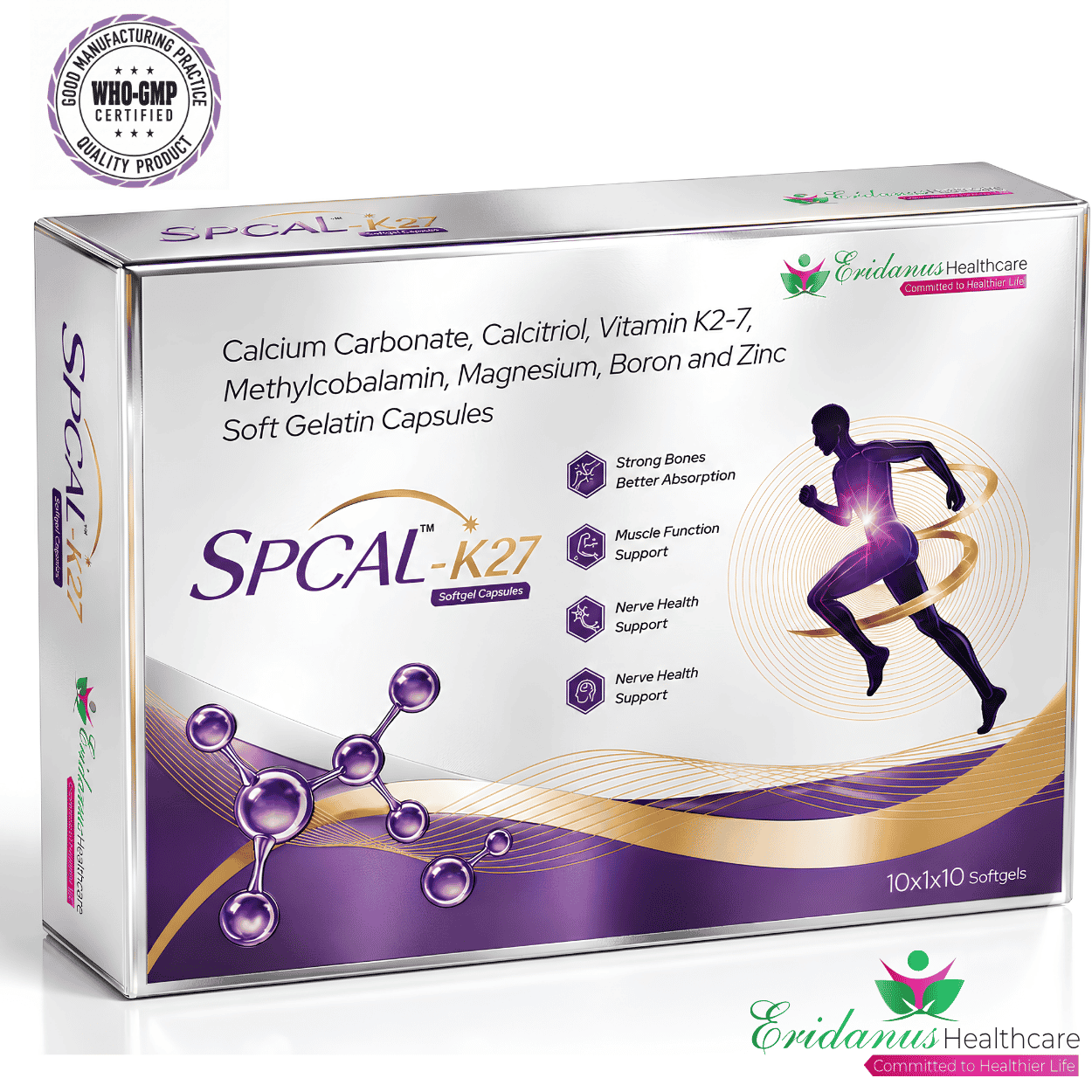
SPCAL-K27 by Eridanus Healthcare : Calcium 250mg + Calcitriol 0.25mcg + K2-7 45mcg Capsules
SPCAL-K27 by Eridanus Healthcare uses Methylcobalamin, not Cyanocobalamin — a distinction that matters more than it might seem. Cyanocobalamin is a synthetic, inactive form of B12 that the body has to convert before it can use it, releasing a trace cyanide molecule in the process. Methylcobalamin is already in the bioactive form the body actually uses at the cellular level, with no conversion step required. Alongside Calcitriol (active Vitamin D) and Vitamin K2-7, this makes SPCAL-K27 by Eridanus Healthcare a more complete bone-health formulation than combinations built around older B12 forms.
At a Glance
SPCAL-K27, marketed by Eridanus Healthcare
Uses Methylcobalamin, the bioactive form of B12, not Cyanocobalamin
Uses Calcitriol (active Vitamin D), not standard D3
Vitamin K2-7 included to direct calcium into bone
Magnesium, Boron and Zinc added as bone-metabolism cofactors
Manufactured at a WHO-GMP, ISO and GMP certified facility
Schedule H (prescription only)
Open for PCD Pharma Franchise across India
Composition
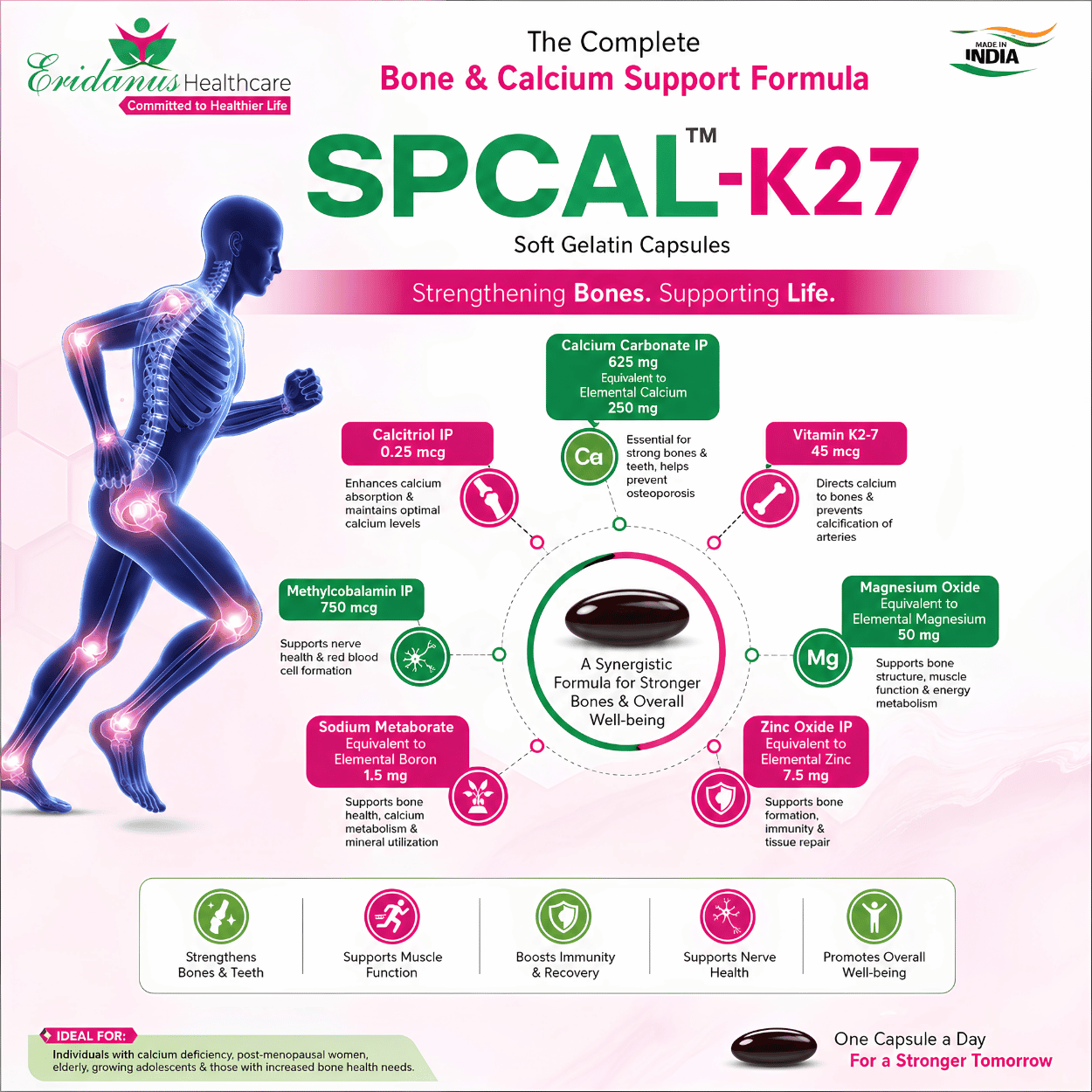
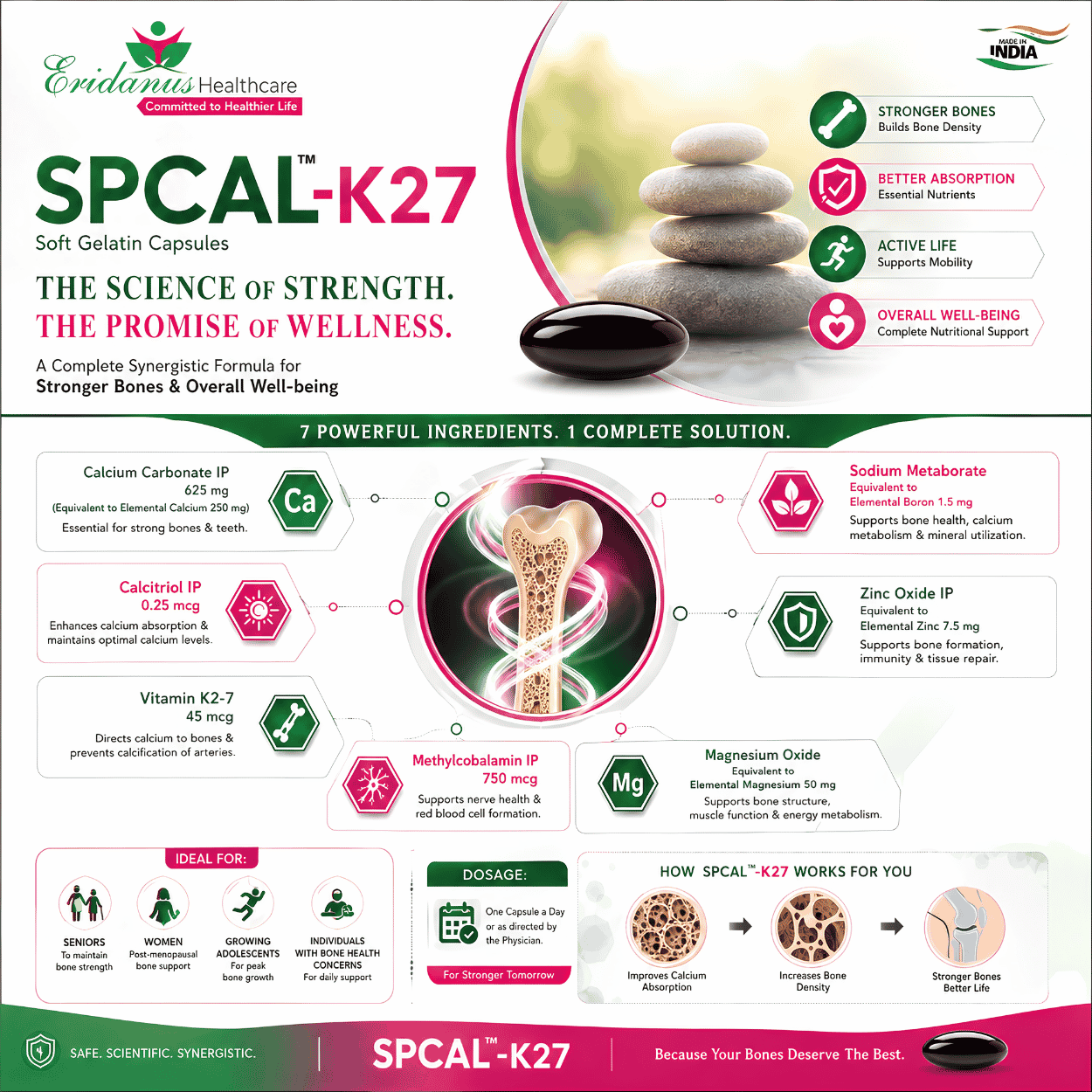
Each SPCAL-K27 soft gelatin capsule from Eridanus Healthcare contains:
Calcium Carbonate IP — 625 mg (equivalent to Elemental Calcium 250 mg)
Calcitriol IP — 0.25 mcg
Vitamin K2-7 — 45 mcg
Methylcobalamin IP — 750 mcg
Magnesium Oxide — equivalent to Elemental Magnesium 50 mg
Sodium Metaborate — equivalent to Elemental Boron 1.5 mg
Zinc Oxide IP — equivalent to Elemental Zinc 7.5 mg
Methylcobalamin vs Cyanocobalamin — Why It Matters in SPCAL-K27
Some combinations sold under similar-sounding names use Cyanocobalamin because it's cheaper and more chemically stable in storage. But it's an inactive precursor — the liver has to convert it into methylcobalamin or adenosylcobalamin before the body can actually use it, and that conversion step can be inefficient in older patients or those with liver impairment, the same population most likely to be taking a bone-health formulation in the first place. SPCAL-K27 by Eridanus Healthcare skips that conversion step entirely by using Methylcobalamin directly.
Why the Rest of the Formula Works Together
Calcium alone doesn't get absorbed well without active Vitamin D driving its uptake in the gut, which is the role Calcitriol plays here rather than relying on standard D3 and its conversion pathway. Vitamin K2-7 works downstream of that, activating proteins that direct calcium into bone matrix rather than soft tissue. Magnesium, Boron and Zinc all support this same process as bone-metabolism cofactors.
Indications / Areas of Use
- Osteoporosis and osteopenia management, as prescribed
- Vitamin D and calcium deficiency, particularly where conversion of D3 to its active form is impaired
- Bone mineral density support in elderly and postmenopausal patients
- Adjunct nutritional support in renal bone disease, under nephrology guidance
Who Typically Prescribes SPCAL-K27
Orthopedicians and Rheumatologists prescribe it for osteoporosis and bone density management. Endocrinologists and Geriatricians use it for elderly patients with impaired Vitamin D and B12 conversion, and Nephrologists prescribe Calcitriol-based formulations in patients with renal bone disease.
Dosage & Administration
As prescribed by a Registered Medical Practitioner. This is a Schedule H drug — sale by retail is permitted only against the prescription of a Registered Medical Practitioner. Not for self-medication.
Safety Information
Because Calcitriol is the active form of Vitamin D, periodic monitoring of serum calcium is recommended during treatment to avoid hypercalcemia. Not recommended in patients with existing hypercalcemia or hypervitaminosis D. Store below 25°C, protect from light and moisture. Keep out of reach of children.
Patient Counselling Points
- Take exactly as prescribed — do not increase the dose independently given the active Vitamin D content
- Attend any calcium-level monitoring appointments advised by the physician
- Report symptoms such as unusual thirst, nausea, or confusion, which can indicate elevated calcium levels
- Inform the physician of any other calcium, Vitamin D, or B12 supplements being taken concurrently
Why SPCAL-K27 from Eridanus Healthcare
SPCAL-K27 by Eridanus Healthcare is manufactured at a WHO-GMP, ISO and GMP certified facility, using Methylcobalamin and Calcitriol rather than the cheaper, less bioavailable alternatives some similarly-named products use. This gives franchise partners a genuine clinical differentiator to lead with, not just a price point. It's open for PCD Pharma Franchise across India — for SPCAL-K27 from Eridanus Healthcare specifically, contact us directly to confirm territory availability.
Frequently Asked Questions
What is SPCAL-K27 by Eridanus Healthcare used for?
SPCAL-K27 by Eridanus Healthcare is a 7-ingredient capsule used in osteoporosis, osteopenia and Vitamin D/calcium/B12 deficiency management, as prescribed by a registered medical practitioner.
Does SPCAL-K27 by Eridanus Healthcare use Methylcobalamin or Cyanocobalamin?
SPCAL-K27 by Eridanus Healthcare uses Methylcobalamin, the bioactive form of Vitamin B12 that the body can use directly without needing to convert it first.
Why does SPCAL-K27 use Calcitriol instead of Vitamin D3?
Calcitriol is the already-active form of Vitamin D, so it works without needing the liver and kidney conversion steps that D3 requires.
Is SPCAL-K27 available for PCD Pharma Franchise from Eridanus Healthcare?
Yes. SPCAL-K27, manufactured and marketed by Eridanus Healthcare, is open for PCD Pharma Franchise across India.